

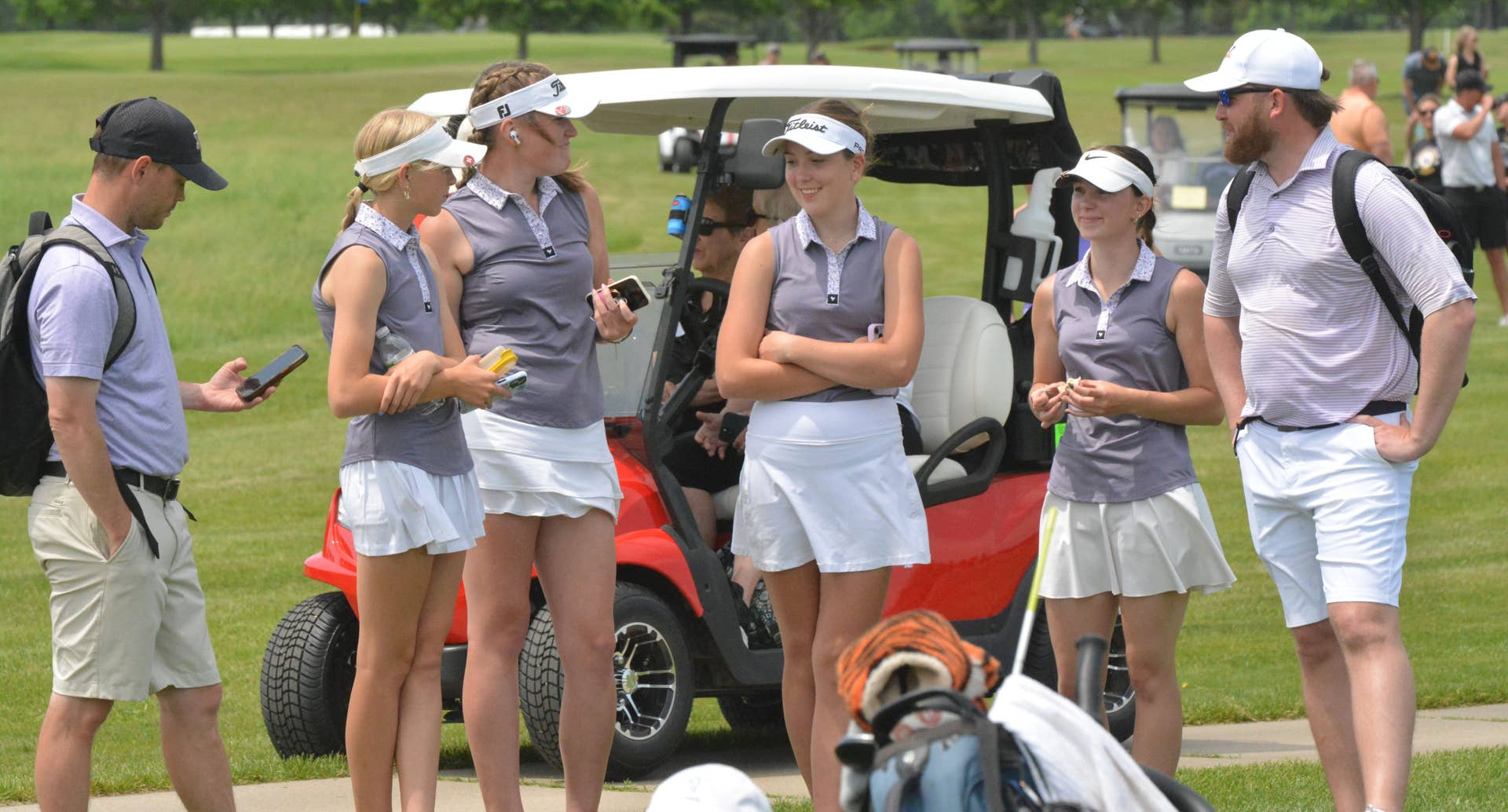
I have spent a large part of my career trying to get kids onto golf courses.
For years, finding interested children was the hard part. When I started Little Linksters in 2008, we ran clinics, visited schools, talked to parents and searched for ways to make a game with too many barriers feel welcoming. Once a child was hooked, we could usually find a quiet afternoon or an open stretch of tee times where that interest could turn into actual golf.
That is not the golf business in 2026.
Golf is busy, and it has been busy for a while now. The surge that accelerated in 2020 did not fade when people returned to offices, restaurants, stadiums and airports. More than 500 million rounds have been played at U.S. courses in each of the past six years. In 2025, the country set a rounds record for the fourth time in five years.
This is what the industry wanted. Lapsed players returned. Beginners arrived. More women and people of color took up the game. Course owners and operators endured plenty of lean years, and nobody should resent them for finally having demand, pricing power and some room to reinvest in their properties.
But the packed tee sheet has created a problem that is becoming harder to ignore. The children we spent decades inviting into golf are showing up at the same moment courses have fewer reasons to discount or protect playing time for them.
The National Golf Foundation reported that just under 4 million juniors played on a course in 2025, the highest total since 2004 and a 58% increase from 2019. Girls made up 35% of that group. Asian, Black and Hispanic juniors accounted for 26%.
Every number in that report represents a young golfer who needs somewhere to play.
A Range Session Is Not a Round of Golf
Practice facilities matter. Simulators matter. Entertainment venues have introduced millions of people to swinging a club without asking them to learn every custom and complication of traditional golf on Day 1. I am glad all of those entry points exist.
Still, no coach should confuse access to golf balls with access to the game.
A child can learn to make better contact on a range. The course is where that child learns which club to hit, where to miss, how to deal with a bad lie and what to do after a triple bogey. It is where pace of play, safety and course care stop being items on a handout. It is also where a young player learns to keep going without a coach standing behind every shot.
That transition matters. I have seen plenty of children who enjoyed lessons. The ones who started thinking of themselves as golfers were usually the ones who got to play.
A junior membership card is only as valuable as the tee times attached to it. The same applies to a school team with no dependable place to practice or a low-cost program that can enroll kids but struggles to get them onto a course. Counting registrations is easy. Turning those children into golfers requires course time.
I Understand What an Open Tee Time Costs
I have sat on the operator’s side of this discussion, too.
When I managed Winter Park Golf Course, a nine-hole municipal facility in Central Florida, an unsold tee time was inventory that expired. You could not put an empty 10:12 start on a shelf and sell it next Tuesday. Payroll, maintenance, equipment, insurance and utilities did not become cheaper because the course had a junior mission.
That economic reality is even sharper now. I am not suggesting that a course hand away its most valuable 8:10 a.m. Saturday tee time in peak season. I am suggesting that “we are too busy” cannot become the whole junior-golf policy.
There is a wide stretch between giving away prime inventory and giving young players no reliable access at all.
Youth on Course works inside that stretch. Participating facilities decide when members can play for $5 or less, and the organization provides a custom subsidy to reimburse the course for the agreed difference. The facility retains control of its availability and can adjust as demand changes. More than 2,300 courses participate.
That model respects the business. The operator identifies where junior play can fit instead of surrendering control of the tee sheet.
Youth on Course is not the only answer. A facility might reserve a few weekday afternoon windows and release any unused times to the public 24 hours ahead. Another could offer late-day nine-hole starts, walking-only access, back-nine play at certain hours or a summer rate when school is out. Private clubs can help local teams during low-use periods. Municipal courses can include youth rounds among the public-service outcomes they measure.
The details should be local. The commitment should not be accidental.
School Teams Need a Home, Not a Favor
My view of this issue has changed again since I began helping coach the Winter Park High School boys golf team.
A team does not need unlimited access. It does need enough predictability for coaches to plan practice and enough course time for players to learn how to compete. Finding a few openings at the last minute may get kids onto the property, but it does not give a program much foundation.
Schools and junior organizations have responsibilities in this arrangement. Coaches should teach pace of play before it becomes the golf shop’s problem. Players should know how to repair ball marks, replace divots, rake bunkers and respect members and daily-fee customers. Group size, practice areas, starting times and expected behavior should be clear before the season begins.
Access should come with accountability. That is a fair bargain.
Courses should also measure whether protected times are being used. If a program regularly leaves slots empty, change the number or the release deadline. If a twilight window is constantly full, look for another one. A junior-access plan does not have to be frozen forever to be dependable.
What it cannot be is the first thing erased every time the public tee sheet fills up.

The Business Case Goes Beyond Today’s Green Fee
There is a financial argument for keeping young golfers close, although it requires a longer lens than the daily sales report.
Juniors rarely arrive alone. Parents buy range balls, food and merchandise. Some take lessons or play while their child practices. School teams connect facilities to families throughout the community. Over time, young players become full-paying golfers, members, volunteers, employees, coaches and customers who bring their own children back.
I also know that not every child will stay with golf. That has always been true. Kids try activities, lose interest, change sports and discover other parts of their lives. We cannot control all of that.
We can control whether golf’s welcome has any substance behind it.
The nearly 4 million juniors playing today are not a marketing audience we hope to reach someday. They are already in our academies, on our school teams and at our practice facilities. Some are waiting for the chance to find out whether they really love playing this game.
Owners and operators should make money during this boom. They should improve their courses and enjoy the stability that full tee sheets can provide. They should also set aside some amount of usable, predictable course access for the players who will matter when the current wave eventually settles.
That time might be a weekday afternoon. It might be nine holes near sunset. At one course, it may be four groups. At another, it may be only one.
To a busy operator, one junior time can look small on the tee sheet. After three decades of watching children grow into golfers, I know it can be much bigger than that.
PGA of America Golf Professional Brendon Elliott is an award-winning coach and golf writer who serves as Athlon Sports Senior Golf Writer. Read his recent “The Starter” on R.org, where he is their Lead Golf Writer. To stay updated on all of his latest work, sign up for his newsletter or visit his MuckRack Profile.
Comments
Have fun. Don't be mean. Feel free to criticize ideas, not people. Report bad behavior.
No comments yet
Be the first to share your thoughts — your comment starts the conversation.